Himalayan Salt vs Table Salt: A Complete Comparison
An in-depth analysis of mineral content, health benefits, and culinary uses.
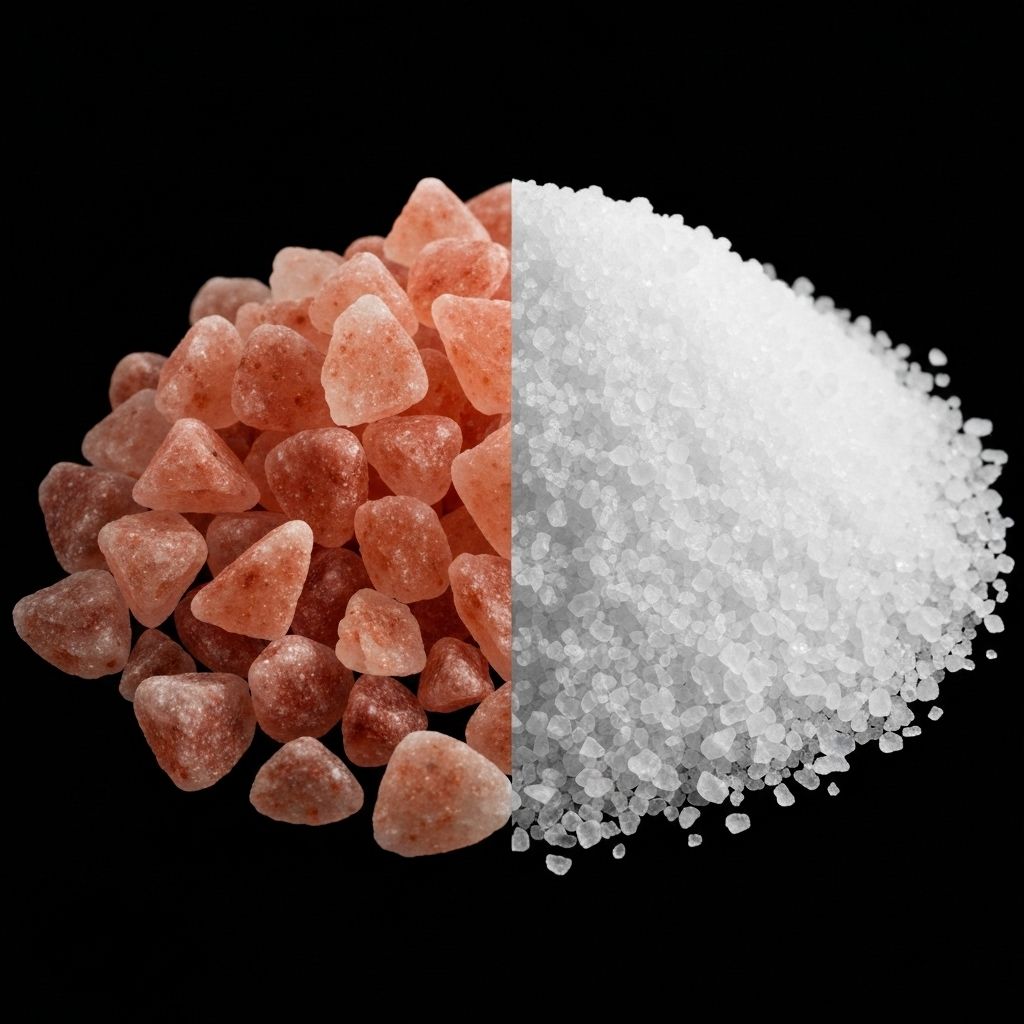
The Great Salt Debate
In recent years, Himalayan pink salt has gained popularity as a "healthier" alternative to regular table salt. But what does the science actually say? Let's examine the key differences between these two common salts to help you make an informed choice.
Origin and Processing
- • Mined from ancient sea beds in Pakistan
- • Formed over 250 million years ago
- • Minimal processing, hand-harvested
- • Natural pink color from iron oxide
- • Contains 84 trace minerals
- • Extracted from salt mines or seawater
- • Heavily processed and refined
- • Anti-caking agents added
- • Fortified with iodine
- • 99.9% sodium chloride
Mineral Content Analysis
The most significant difference between these salts lies in their mineral composition:
- • Sodium (98%)
- • Chloride
- • Sulfate
- • Iron
- • Magnesium
- • Calcium
- • Potassium
- • Zinc
- • Copper
- • Chromium
- • Molybdenum
- • Selenium
Health Benefits Comparison
- • May support better hydration due to mineral content
- • Contains natural electrolytes
- • No artificial additives or anti-caking agents
- • May help maintain pH balance
- • Lower sodium content per gram than table salt
- • Fortified with iodine (prevents thyroid disorders)
- • Consistent sodium content
- • More affordable and widely available
- • Essential for preventing iodine deficiency
- • Dissolves easily in cooking
Culinary Applications
Both salts have their place in the kitchen, but they behave differently:
Best Uses for Himalayan Salt:
- Finishing salt for dishes
- Salt blocks for cooking and serving
- Seasoning meats before grilling
- Adding to homemade electrolyte drinks
Best Uses for Table Salt:
- Baking (consistent results)
- Pasta water and boiling
- Preserving and canning
- General cooking and seasoning
The Bottom Line
While Himalayan pink salt does contain additional minerals, the amounts are generally too small to provide significant nutritional benefits. However, it offers a cleaner ingredient profile without additives. Table salt remains important for iodine intake, especially for those at risk of deficiency. The best approach is to use both strategically based on your needs and preferences.
Expert Recommendation:
Use Himalayan salt for finishing and flavor enhancement, and ensure adequate iodine intake through iodized salt or other dietary sources. Moderation is key with any salt type.