Cooking with Different Salts: A Chef's Guide
Learn which salts work best for different cooking methods and flavor profiles.
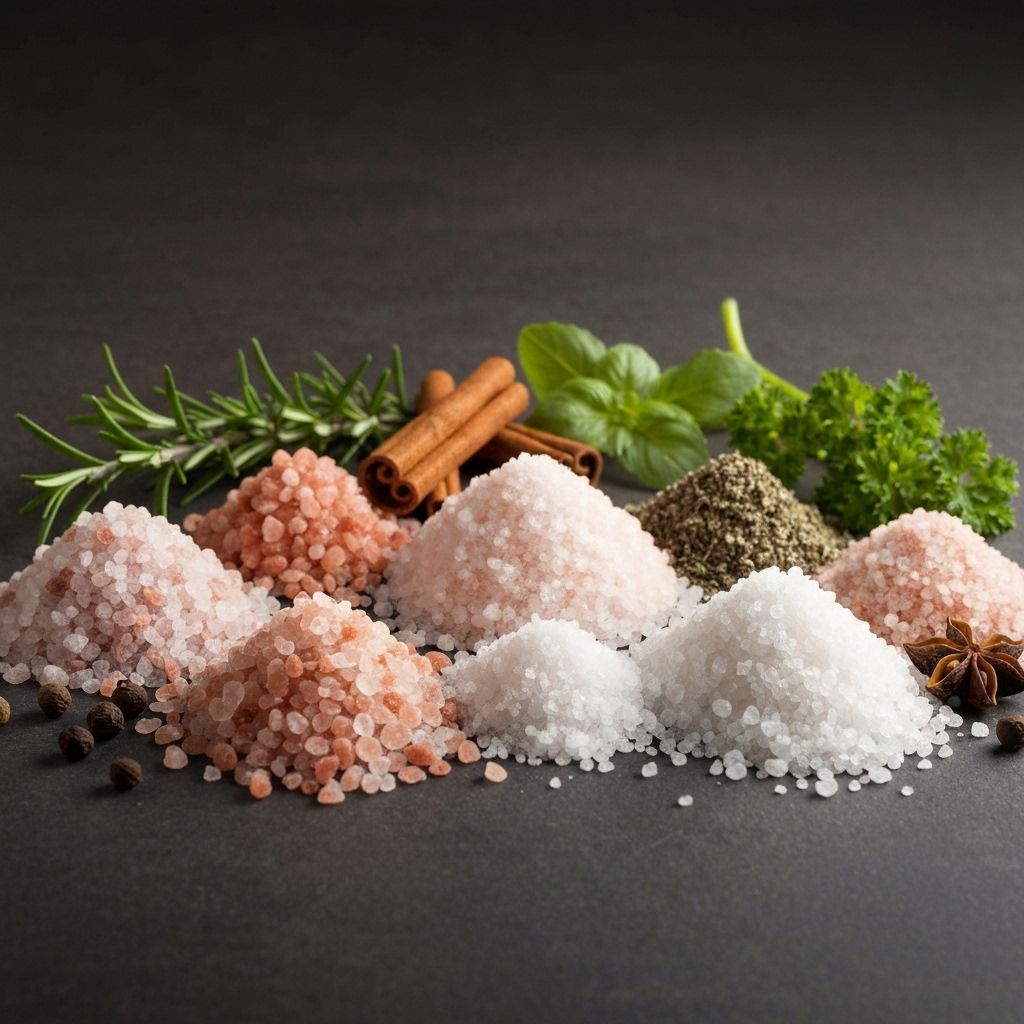
Mastering Salt in the Kitchen
Salt is more than just a seasoning—it's a fundamental tool that can transform your cooking. Different types of salt have unique characteristics that make them better suited for specific culinary applications. Understanding these differences will elevate your dishes and help you make the most of each salt's unique properties.
Salt Types and Their Culinary Strengths
Best for: Baking, pasta water, general cooking
Fine sea salt dissolves quickly and distributes evenly, making it perfect for baking where consistent results matter. Its clean taste won't overpower delicate flavors, and it measures similarly to table salt in recipes.
Best for: Finishing dishes, salt-crusted fish, rimming cocktail glasses
The larger crystals provide bursts of salinity and a satisfying crunch. Use it to finish grilled meats, roasted vegetables, or chocolate desserts for textural contrast and flavor enhancement.
Best for: Grilling, salt blocks, finishing steaks
Its mineral complexity adds depth to grilled meats and vegetables. Salt blocks can be heated for cooking or chilled for serving, imparting a subtle mineral flavor that enhances rather than overwhelms.
Best for: Finishing desserts, salads, delicate fish
The pyramid-shaped crystals dissolve slowly on the tongue, providing controlled bursts of flavor. Perfect for finishing dishes where you want the salt to be noticed and appreciated.
Cooking Techniques by Salt Type
Seasoning During Cooking
For dishes that cook for extended periods, use fine salts that dissolve completely. Sea salt or kosher salt work well for soups, stews, and braises where the salt needs to integrate fully into the dish.
Finishing Techniques
Finishing salts should complement and enhance the final dish. Use coarser salts with interesting textures and flavors. The key is to add them just before serving to maintain their unique characteristics.
- • Taste your salt before using—different brands can vary significantly in intensity
- • Store finishing salts in airtight containers to prevent moisture absorption
- • Use a light hand with flavored salts—a little goes a long way
- • Consider the dish's other flavors when choosing your salt type
- • Warm salt blocks gradually to prevent cracking
Pairing Salts with Specific Foods
Proteins
- Red Meat: Coarse sea salt, Himalayan pink salt
- Fish: Flaky sea salt, fine sea salt
- Poultry: Kosher salt, herb-infused salts
- Eggs: Flaky sea salt, black Hawaiian salt
Vegetables & Desserts
- Roasted Vegetables: Coarse sea salt
- Salads: Flaky sea salt
- Chocolate: Flaky sea salt, smoked salt
- Caramel: Flaky sea salt, Celtic sea salt
Common Mistakes to Avoid
- Using expensive finishing salts for cooking—save them for finishing
- Adding salt too early to vegetables—it can draw out moisture
- Using the same salt for everything—different dishes benefit from different salts
- Over-salting with mineral-rich salts—they can be more potent than expected
- Not adjusting for salt crystal size when substituting in recipes
Key Takeaway:
The right salt can elevate a good dish to greatness. Experiment with different types to discover your preferences, but remember that technique and timing are just as important as the salt itself.